Hugh Laurie reached a level of success few actors ever experience. As Dr. Gregory House, he became one of television’s highest-paid stars, earning nearly $700,000 per episode and winning multiple Golden Globes. Yet behind the acclaim, Laurie has carried a lingering sense of guilt—one that fame has never been able to silence.
His late father, Dr. William Laurie, was a man of extraordinary achievement: a Cambridge-educated physician, an Olympic gold medalist, and a decorated war hero. Hugh initially seemed destined to follow the same path. He attended the same Cambridge college and trained intensely as a rower, with Olympic dreams of his own.
But life took an unexpected turn when Laurie joined the Cambridge Footlights comedy troupe. There, he formed lifelong creative bonds with Stephen Fry and Emma Thompson—connections that quietly pulled him away from medicine and toward entertainment.
Throughout the 1980s and ’90s, Laurie became a beloved figure in British comedy. Global recognition arrived with House, where his portrayal of a brilliant but troubled doctor resonated with millions. Ironically, the role that defined his career also deepened his inner conflict.
Laurie later admitted that the demanding production led to emotionally difficult periods, describing moments of deep exhaustion and isolation. Even after House ended, he found himself returning to medical roles, including the 2016 series Chance, where he played a neuropsychiatrist—proof of his ongoing fascination with the world he never entered.
Despite everything he achieved, Laurie has spoken openly about feeling he took “shortcuts” in life. He worries that his father would have disapproved of him becoming a “fake doctor” on screen rather than a real one in life.
His story is a powerful reminder that success doesn’t always erase doubt—and that even those who seem to have everything may still wrestle with expectations, legacy, and unresolved regret.
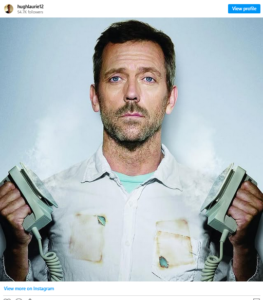
Behind the fame, fortune, and awards, a quiet guilt has followed him for decades…See More